Who Can Still Afford to Buy a Home: New Truework 2026 Affordability Report

Download the full report here.
Why Truework built a housing affordability model using verified mortgage data
For millions of Americans, homeownership remains the cornerstone of the American Dream. But in today’s market, that dream is increasingly out of reach for many. The question is no longer whether Americans want to buy a home; it is whether they actually can.
Truework set out to answer that question using a dataset few have access to at this level: real income data from hundreds of thousands of mortgage loan applications. As the provider of income and employment verification solutions for the nation’s top mortgage lenders, Truework has a unique window into the financial realities facing homebuyers today.
Using roughly 300,000 mortgage applicant records, we built an affordability model that pairs each applicant’s verified income and occupation with local home values and prevailing 30-year fixed mortgage rates. Unlike survey-based studies that rely on self-reported income or Census estimates, this analysis is grounded in the same verified records that lenders use in mortgage underwriting.
This report also uniquely incorporates income stability and occupational dynamics, providing a more complete view of who can realistically access homeownership.
The result is a more precise view of housing affordability in America today: who can still buy, who is getting squeezed out, and how that picture changes across states, occupations, and income profiles.
Together, and studied over time, these dynamics point to a fundamental shift: the housing market is becoming more selective, with access increasingly defined not just by how much people earn, but also by how predictably they earn it, and where they live.
Methodology
This analysis draws on anonymized data from approximately 300,000 Truework-verified income records for mortgage applicants from Q1 2022 through Q4 2025. (Note: all personally identifiable information was removed from this data). These records were matched with ZIP-code-level Zillow Home Value Index data, Freddie Mac 30-year fixed-rate mortgage rate data (FRM), and Truework’s proprietary measure of downside income instability.
Occupation categories were assigned using the Bureau of Labor Statistics Standard Occupational Classification taxonomy.
To evaluate affordability, Truework uses a payment-to-income ratio (PTI). PTI compares a borrower’s verified monthly income with their estimated monthly mortgage payment, assuming a 20% down payment and the average 30-year fixed mortgage rate at the time. For the purpose of this report, a borrower is considered to be in an affordable position when PTI is 0.36 or below, which aligns with standard mortgage qualification thresholds. Lower PTI indicates greater affordability.
We also examined downside income instability, which measures how much a borrower’s monthly income can fall below their typical base earnings. This matters because even when annual income appears sufficient, month-to-month fluctuations in income can affect both mortgage qualification and long-term affordability*. Also, this income instability is likely to increase with the rising popularity of gig work. According to data from ADP, individuals who received a short-term W-2 or a 1099 accounted for 27% of all jobs held in 2024. And an even more recent survey from Side Hustle Nation shows 39% of Americans (~80M) currently report having a side hustle to generate extra income.
*To better illustrate “income instability,” Truework Staff Data Scientist Kenan Herbert offers the following example: A worker earns $1,000 per week in base pay (40 hours), and an additional $800 in tips, totaling $4,800 for the month ($4,000 base + $800 tips). The next month, their hours are reduced to 20 per week, lowering base pay to $500 per week, while tips remain $800, bringing total monthly income to $2,800. In this case, the worker experienced a downside income shock of $1,200 or -30%. Truework’s instability measure captures the average of these types of month-over-month income variations.
Key Findings
- Mortgage rates–not home prices–drove the affordability crisis. Housing affordability deteriorated sharply between early 2022 and late 2023 as borrowing costs grew. At the peak in Q3 2023, the typical borrower had to devote nearly 34% of their income to a monthly mortgage payment.
- Income growth helped offset some of the pressure, but not enough. Verified incomes among mortgage applicants rose faster than home values over the study period, but affordability still worsened. Rates eased a bit in 2025, but affordability remains below early 2022 levels.
- The homebuyer pool is shifting. Income growth in the dataset significantly outpaces national wage growth, suggesting a shift in the composition of the buyer pool itself. Lower-income borrowers appear to be postponing or abandoning homeownership, leaving only high-income earners pursuing the dream.
- Income instability is rising, and quietly making affordability worse. The share of mortgage applicants experiencing income instability rose from 50% in 2022 to 62% in 2025, increasing the likelihood that borrowers fall outside affordability thresholds even when average income appears sufficient.
- What you do (not just what you earn) matters. Workers in lower-wage, service-oriented roles are often hit from two sides: they typically earn less to begin with, and their income tends to fluctuate more from month to month. In these occupations, paychecks are more likely to depend on hours worked, tips, or variable schedules, which can introduce meaningful swings in reported income. Even when their average annual earnings look sufficient on paper, that lack of stability makes it harder to qualify under standard underwriting models—especially compared with higher-paid, salaried professions where income is both larger and more predictable.
Data Analysis
To better understand the forces driving today’s affordability challenges, we analyzed verified income data alongside home values, mortgage rates, and income stability trends. The following sections examine how affordability has shifted over the last few years, where it remains within reach, and how borrower factors like occupation and income instability shape access to homeownership in America today.
Section 1: Who’s Still Buying in Today’s Market?
One of the clearest signals of today’s affordability pressures is not just how expensive homes have become, but who is still applying for a mortgage.
Across Truework’s dataset, verified incomes for mortgage applicants rose significantly between 2022 and 2025. The average applicant income increased from approximately $72,000 in early 2022, to nearly $82,000 by 2025.
At first glance, this might suggest that affordability is improving. But, while incomes in this dataset have grown meaningfully, they have increased at a much faster pace than broader wage growth across the U.S. economy.
This suggests that the pool of prospective homebuyers is shifting, with higher-income households making up a growing share of applicants, while lower-income households are increasingly priced out or choosing to delay purchasing altogether.
As the composition of buyers changes, affordability metrics based solely on applicant data may overstate the accessibility of homeownership for the broader population. It also underscores a widening gap between those who can participate in the housing market and those who cannot.
The Buyer Pool is Getting Younger and More Volatile
The composition of mortgage applicants is shifting in other ways as well. Millennials (age 30-46) currently dominate the home-buying market, representing approximately 52% of mortgage verification volume, a share that has remained relatively stable since 2022.
However, Gen Z (age 18-29) is the fastest-growing cohort. Their presence in the applicant pool has increased significantly, rising from just over 400 records in early 2022 to more than 4,500 by mid-2025, now accounting for roughly 15% of total volume.
At the same time, the typical borrower is becoming more concentrated in knowledge-based occupations, particularly management, technology, and finance, and more likely to exhibit income instability.
Taken together, these trends point to a changing borrower profile: younger, more concentrated in higher-income professions, but also more exposed to income instability, particularly within management fields.
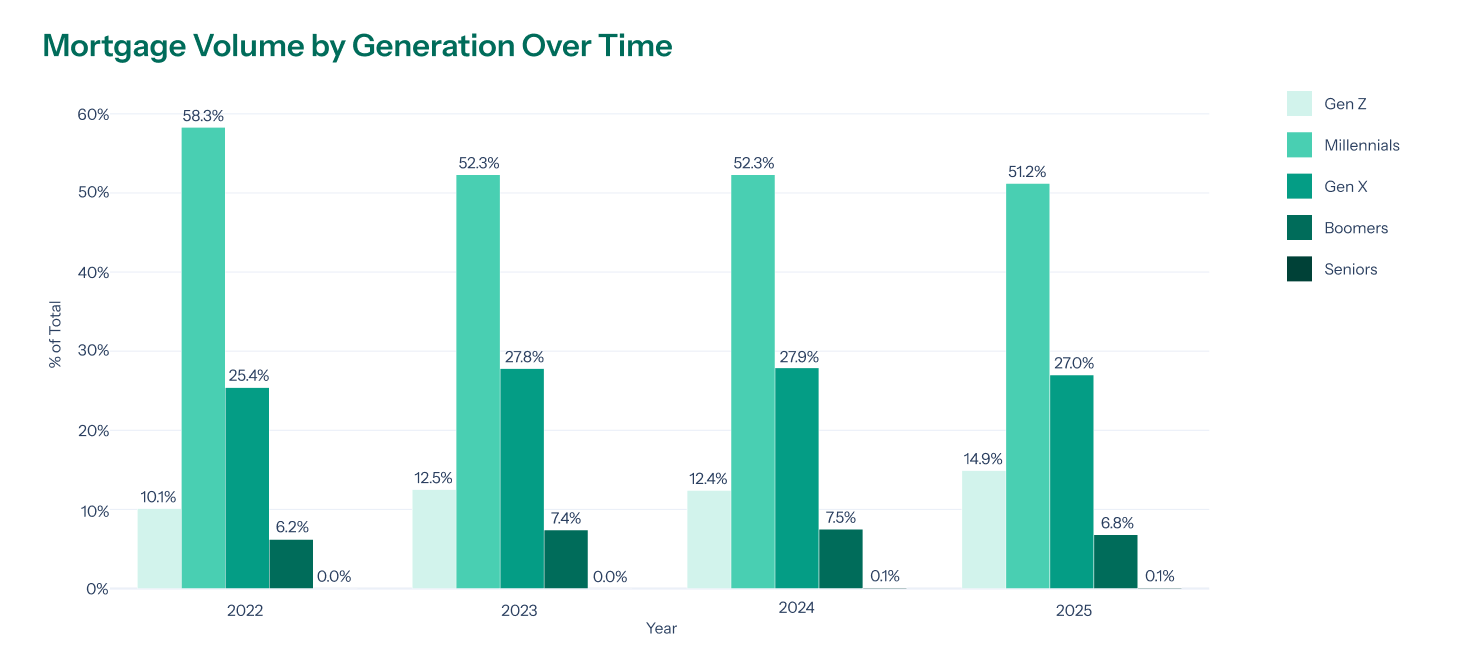
Mortgage Volume by Generation Over Time
Section 2: The National Affordability Picture
To understand how housing affordability has changed in recent years, it’s important to examine the combined impact of home prices, mortgage rates, and borrower incomes.
While home values have remained elevated, the sharp rise in borrowing costs has been the primary driver of affordability challenges. Together, these have significantly increased the share of income needed to purchase a home, reshaping what buyers can afford across the country.
Mortgage Rates Drove the Sharpest Shift in Affordability
The most significant change in housing affordability over the last several years has been the rapid rise in mortgage rates. Between early 2022 and late 2023, the average 30-year fixed mortgage rate nearly doubled from approximately 3.8% to over 7%.
This surge dramatically increased the cost of borrowing, pushing monthly mortgage payments higher—even in markets where home prices stabilized. As a result, many prospective buyers found themselves priced out of homes they could have afforded just one or two years earlier, despite relatively modest changes in home values.
Monthly Payment Burden Increased Significantly
As borrowing costs rose, so did the share of income needed to afford a home. At the beginning of 2022, the typical borrower devoted approximately 23% of their income to a monthly mortgage payment. By the peak of affordability pressure in 2023, that figure had climbed to nearly 34%.
This increase represents a meaningful shift in financial burden, pushing many borrowers closer to (or beyond) standard affordability thresholds used in mortgage underwriting.
At the same time, nationwide average home values increased 12% from approximately $318,000 to $357,000. However, average applicant income outpaced home values. If mortgage rates had remained at early-2022 levels, affordability would have improved by approximately 5.5 percentage points.
In other words, a higher-earning applicant pool offset higher home prices, but that progress was overwhelmed by the increase in borrowing costs.
Affordability Has Improved, But Remains Constrained
As mortgage rates stabilized in 2024 and 2025, affordability conditions showed modest signs of improvement. However, even with some relief in borrowing costs and continued income growth among applicants, affordability has not returned to early 2022 levels. Monthly payment burdens remain elevated, and many buyers continue to face affordability constraints.
While affordability has partially recovered from its peak, it remains highly sensitive to interest rate movements. With mortgage rates still significantly above their 2022 baseline, any renewed increase in borrowing costs in 2026 could quickly reverse recent gains.
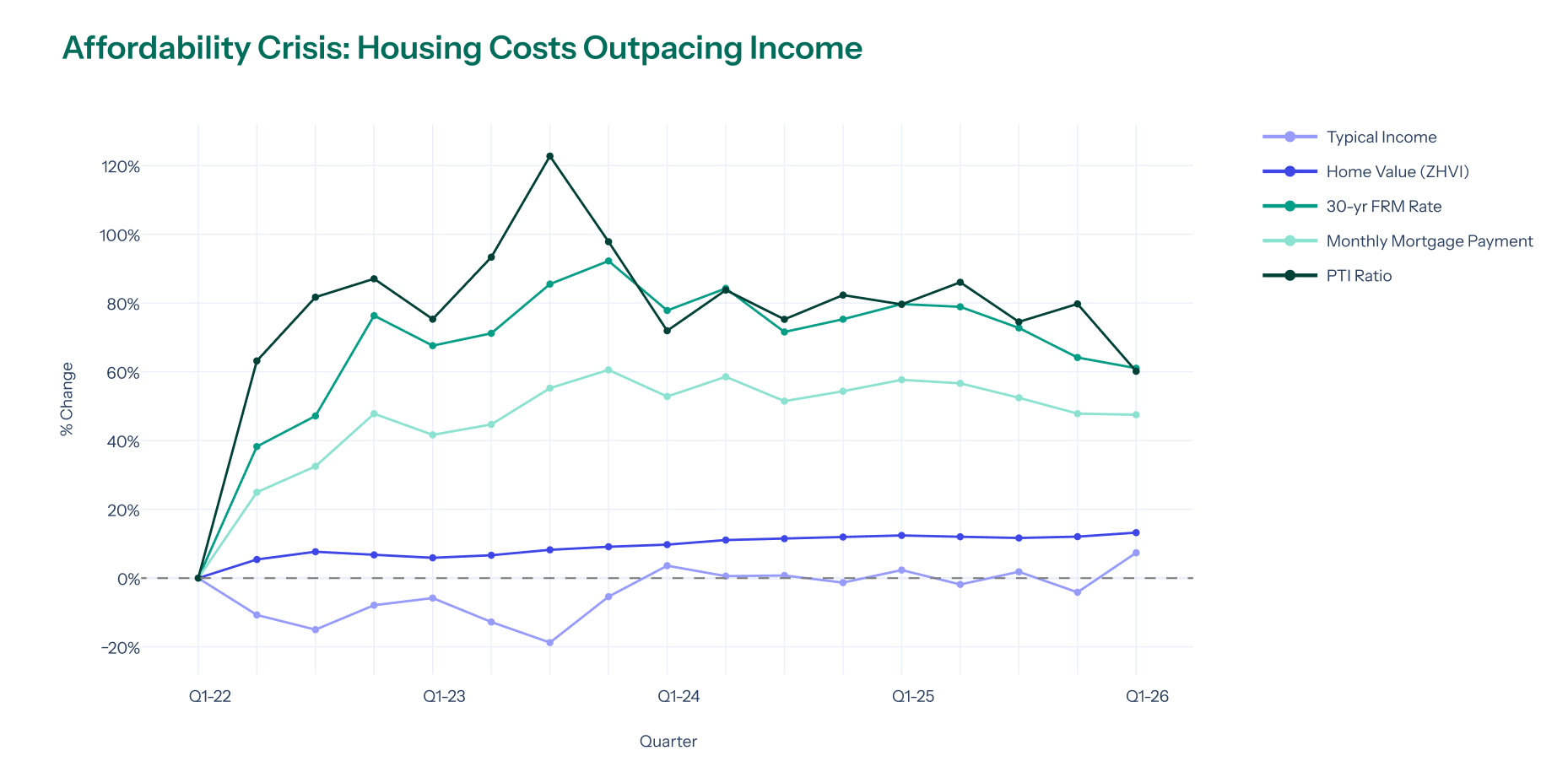
Affordability Crisis: Housing Costs Outpacing Income
Section 3: Where Affordability Is Shrinking
Affordability in the United States is increasingly fragmented. In some parts of the country, homeownership remains within reach for a larger percentage of buyers. In others, it has become accessible only to the highest-earning households.
Across markets, income stability plays a critical, often-overlooked role. Even in regions with lower home prices, income instability can limit borrowing power and introduce additional barriers to homeownership. As a result, affordability is not just about where homes are cheapest, but where incomes are stable enough to support them.
A 65-Point Gap in Affordability Across States
In many parts of the Midwest and South, lower home values suggest a more accessible path to homeownership. From an outsider's perspective, borrowers in these regions should be better positioned to meet affordability thresholds. However, this assumption does not always hold.
In markets where incomes are more variable—due to hourly work, seasonal employment, or tip-based earnings—borrowers may still struggle to qualify, even when home prices are relatively low. This creates a disconnect between a market that appears more affordable based on price alone, but is less accessible in reality due to income instability.
Hawaii ranks as the least affordable state in the dataset, where only approximately 16% of borrowers fall within affordability thresholds. California and Washington follow, with affordability rates of 32% and 40%, respectively.
By contrast, many states in the Midwest and South remain far more accessible. In states such as West Virginia, Louisiana, Illinois, North Dakota, and Ohio, between 76% and 81% of borrowers meet affordability thresholds.
The result is a roughly 65-percentage-point gap between the most and least affordable states, highlighting just how uneven the housing landscape has become.
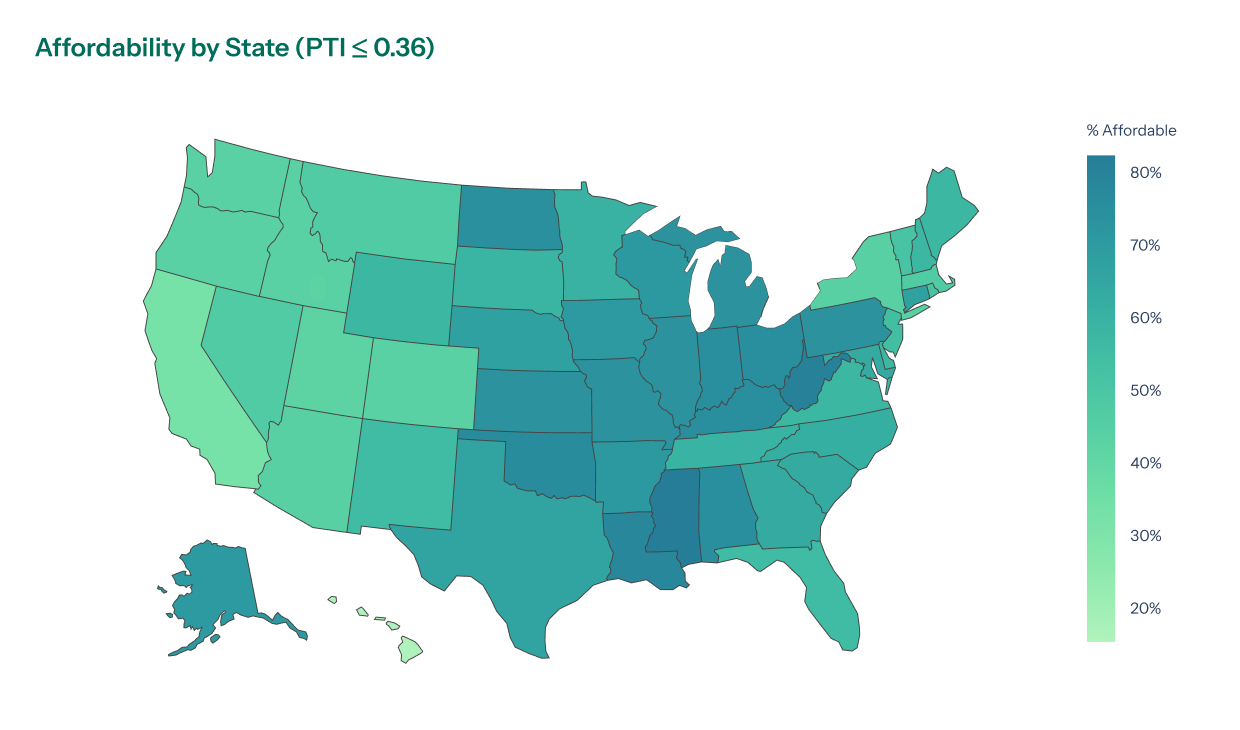
Affordability by State (PTI <.36)
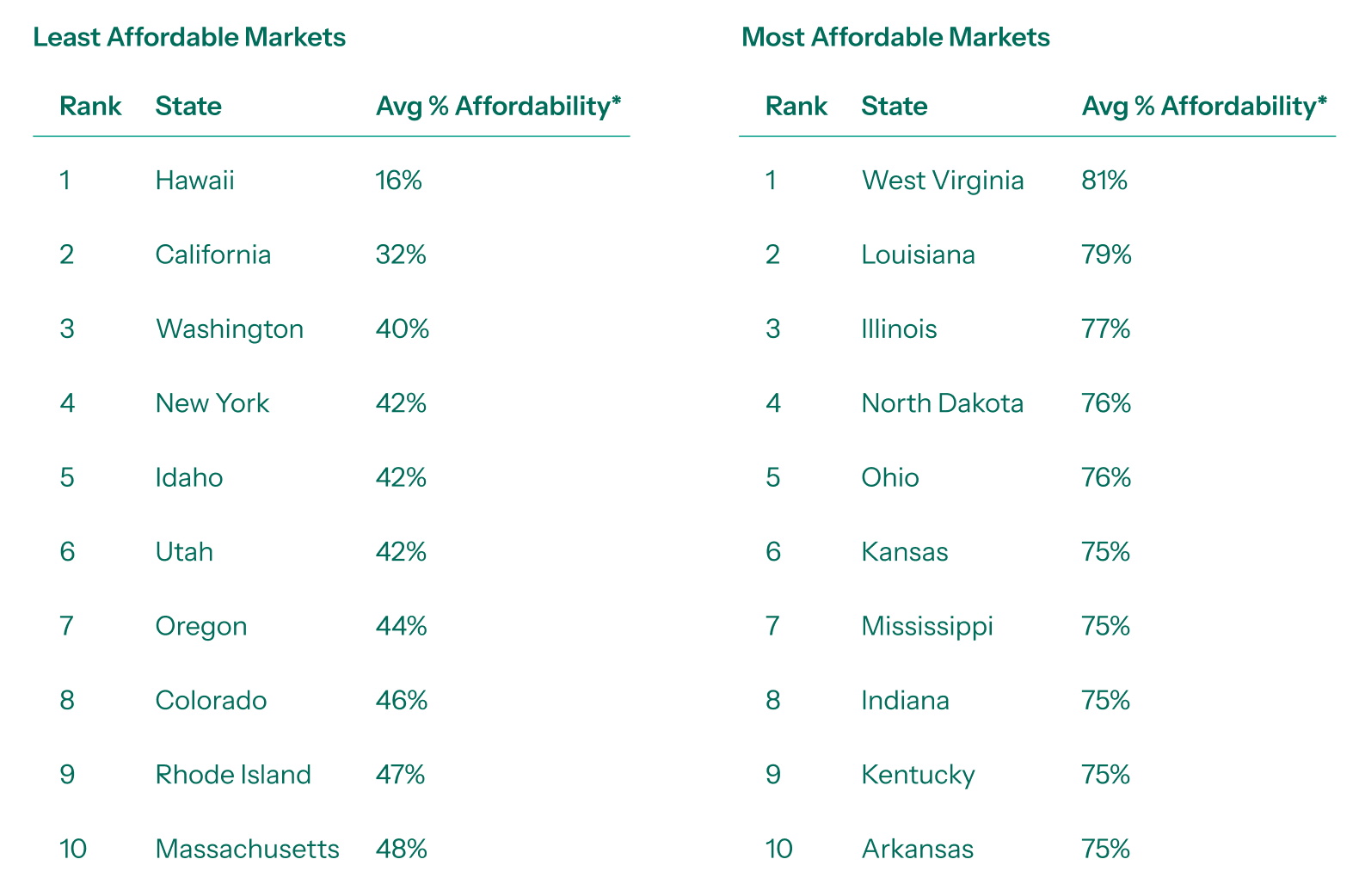
*Avg % Affordable represents the percent of mortgage applicants in each state who can afford to buy homes in that state based on their PTI.
Income Stability Shapes Affordability
The relationship between income stability and affordability varies significantly by location.
Some of the highest levels of income instability are observed in states such as Alaska, Washington, Oregon, Idaho, and Washington, D.C. In these markets, fluctuations in income can meaningfully affect a borrower’s ability to qualify.
In high-cost states, the impact of stability is even more pronounced. Borrowers with stable incomes in Hawaii have an average payment-to-income ratio (PTI) of 0.85, already near the upper bounds of affordability. For borrowers with more unstable incomes, that figure rises to 1.43, pushing them deep into unaffordable territory. The 0.58-point gap between stable and unstable earners illustrates how income instability can significantly worsen affordability outcomes.
More broadly, statistical modeling shows that geography can either amplify or dampen the impact of income instability. In some states, such as Delaware, instability has a strong negative effect on affordability. In others, such as Arkansas, that effect is more muted.
These differences suggest that affordability is shaped not only by home prices and incomes, but also by the stability of those incomes and how that stability varies across regions.
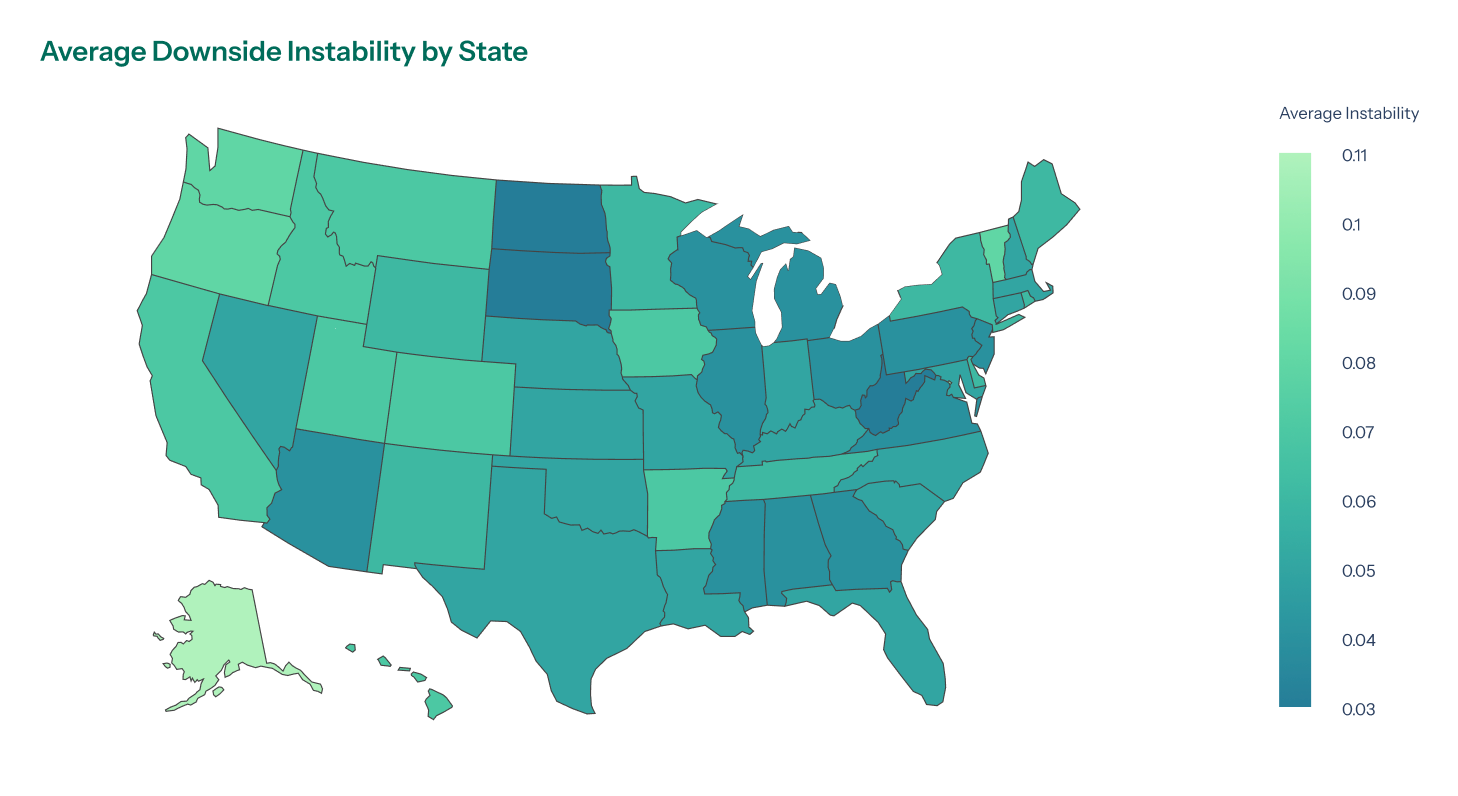
Average Downside Instability by State
Section 4: Who Can Afford to Buy—And Who Can’t
Access to homeownership is increasingly defined by occupation. What people earn still matters, but how they earn it, how stable that income is, and how it is evaluated in underwriting are becoming just as important.
As a result, the gap between who can and cannot afford to buy is widening, both across occupations and within them.
Income Instability is Rising—and Making Affordability Less Predictable
One of the most important shifts in the housing market is the rise in income instability. The share of mortgage applicants experiencing any downside income instability* increased from 50% in early 2022 to 62% by mid-2025. At the same time, the severity of those income swings nearly tripled.
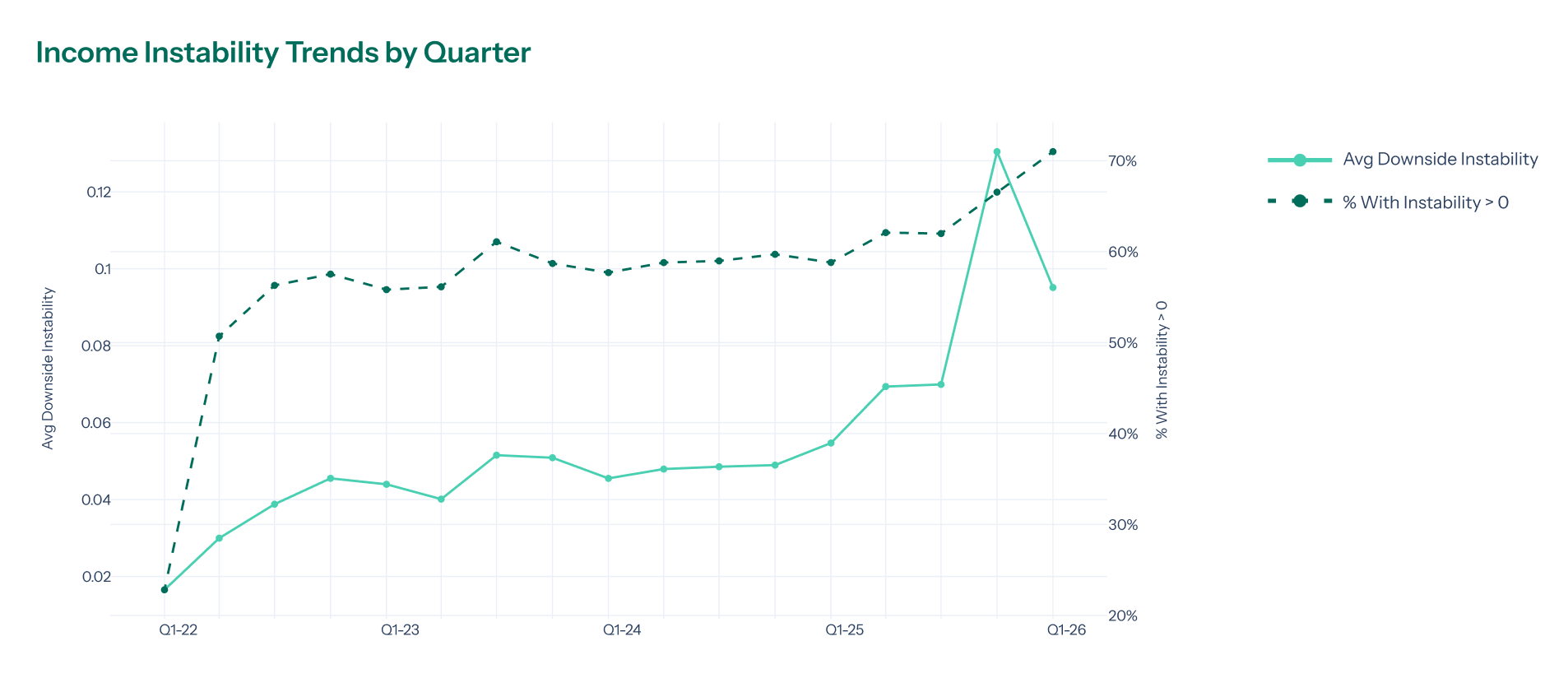
*“Downside instability” is defined as the average month-over-month drop in an applicant’s observed income
This matters most for borrowers near affordability thresholds. Even relatively small month-to-month income drops can push a borrower from qualifying to non-qualifying.
For example, a borrower with a payment-to-income (PTI) ratio of 0.34—just below a typical approval threshold of 0.36—could exceed that threshold with even a modest income decline in a given month. In these cases, instability doesn’t just affect affordability on paper; it directly impacts the ability to qualify for a loan.
This rise in income instability coincides with a shift in the composition of the borrower pool. Younger cohorts—particularly Gen Z—are entering the market at increasing rates, often with less established and more variable income profiles.
Higher-Income Occupations are Increasingly Overrepresented
Higher-income, salaried occupations—including management, computer & mathematical, and business & financial operations—now make up a growing share of mortgage applicants. Management alone has increased from approximately 25% to nearly 30% of all mortgage verifications.
In contrast, more blue-collar and variable-income occupations, such as transportation and material moving, have declined in share among applicants.
This shift reinforces a broader trend: as affordability tightens, the housing market is increasingly dominated by higher-income, more stable earners.
Some Occupations Can Buy Almost Anywhere—Others Almost Nowhere
The gap in affordability across occupations is stark. Workers in higher-income fields consistently remain within affordability thresholds across most markets.
For example, here is how often the following professions are within affordability ranges across the country:
- Computer & Mathematical: experience 75% nationwide affordability
- Management: 71%
- Architecture & Engineering: 68%
- Food Preparation & Serving: 20%
- Healthcare Support: 21%
- Building & Grounds Cleaning: 26%
In practice, this means some occupations can realistically participate in homeownership across a wide range of markets, while others are effectively locked out, even in lower-cost areas.
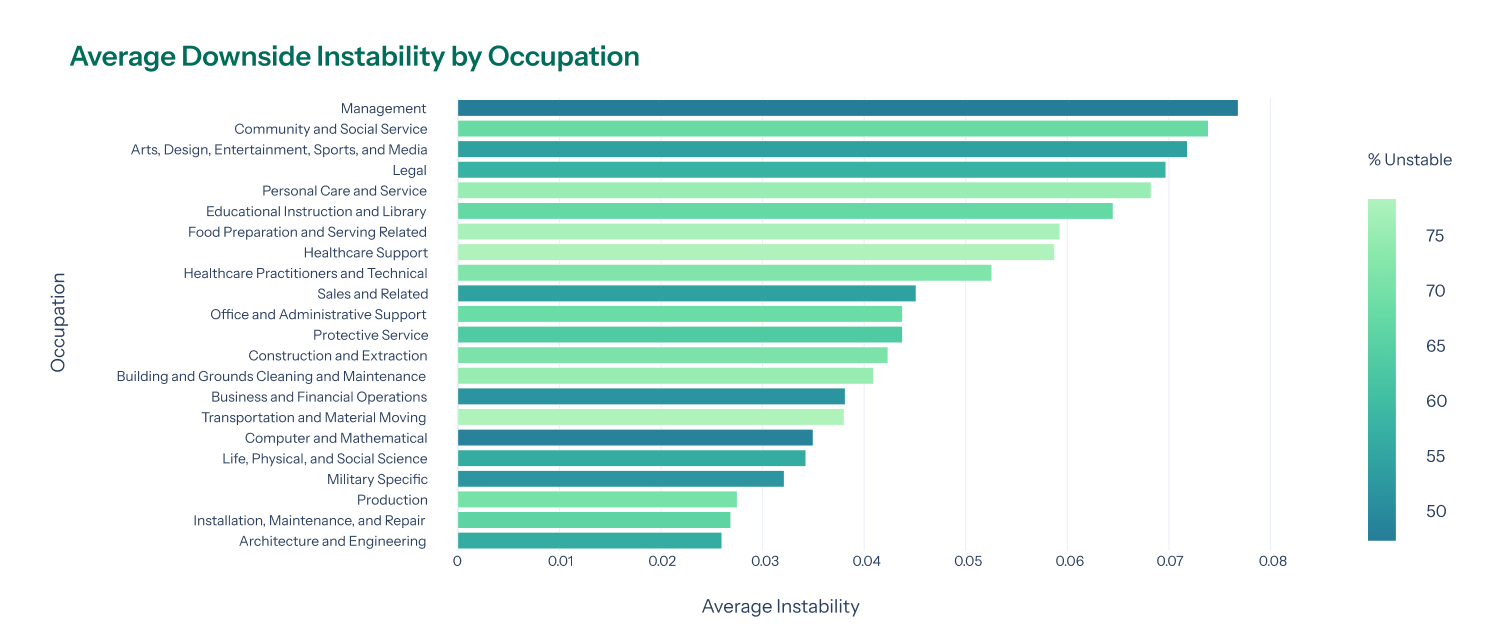
Average Downside Instability by Occupation
Where you live and what you do combine to shape outcomes
The interaction between occupation and geography produces some of the most extreme affordability outcomes. In lower-cost states, higher-income workers often face few barriers to homeownership. In some cases, affordability reaches 100%, meaning every verified applicant in that occupation qualifies within their local market.
Examples include:
- Construction workers in North Dakota
- Software engineers in Maine
- Lawyers in Missouri
At the other end of the spectrum, lower-wage service workers in higher-cost markets face near-total exclusion.
For example:
- 4% affordability for food prep workers in Hawaii
- 8% affordability for healthcare support workers in New Mexico
- 16% affordability for personal care workers in California
These combinations illustrate how occupation and geography interact to shape access to homeownership.
Why affordability recovery has been uneven across occupations
Affordability conditions began to improve after hitting the lowest point in mid-2023, when mortgage rates reached almost 8%. However, that recovery has not been evenly distributed.
Higher-income occupations rebounded more quickly as borrowing costs eased, while lower-wage service occupations saw more limited improvement and remained below pre-rate-shock affordability levels.
This uneven recovery has further widened the gap between those who can re-enter the market and those who remain constrained.
Income Instability Adds an Independent Barrier, Even After Income is Accounted For
Income level is still the strongest predictor of affordability, but it is not the only one. Even after controlling for income, occupation, geography, and time, income instability remains statistically significant and negatively impacts affordability.
Borrowers with unstable income are 28% less likely to meet affordability thresholds, regardless of income. In other words, instability introduces an additional penalty that disproportionately affects borrowers in more variable-income roles.
Income Instability Does Not Impact All Occupations Equally
The impact of income instability varies significantly across occupations. Some occupations experience higher overall instability, meaning they can experience a large decrease in income in a given month. For example:
- Management: 8% decrease
- Community & Social Service: 8%
Other occupations show a high prevalence of volatility:
- Healthcare Support Workers: 78% experience volatility
- Food Prep Workers: 77%
By comparison, more stable professions such as Architecture & Engineering show much lower exposure.
The impact on affordability is also uneven. In occupations such as personal care and protective services, instability can create large gaps between otherwise similar borrowers, turning a borderline qualifying applicant into one that falls well outside affordability thresholds.
What the 2026 affordability data means for mortgage lenders
The housing affordability challenge is increasingly about selectivity. Access to homeownership is now shaped by income level, income stability, occupation, and geography.
According to analysis of data records through March 2026, a few indicators are worth noting:
- Interest rates have climbed back up—currently hovering around 6.46%—from the dip they took into the 5s earlier this year (5.98% in late February). With continued uncertainty about the Middle East, gas prices, and inflation, most economists are not forecasting a major interest drop anytime soon.
- At the same time, homebuyer income is on the rise, even outpacing interest rate growth for this quarter, causing a slight decrease in the payment-to-income ratio.
- However, income instability is also ticking up—from 67% in December to 71% in early April. This is definitely a trend expected to continue, as the nature of work evolves with more Americans earning through gig work, commissions, and non-traditional roles.
Looking ahead, the path to improved affordability remains uncertain. While income growth and modest rate stabilization may provide incremental relief, rising income instability and persistent cost pressures continue to reshape who can realistically enter the market.
Without meaningful shifts in borrowing costs or housing supply, homeownership is likely to remain out of reach for a growing share of Americans.
What stands out most is how many different factors now influence affordability at once. Higher incomes alone aren’t enough to offset today’s conditions. Stability, timing, and location all play a bigger role than they did just a few years ago. That complexity is making the market harder to navigate—not just for buyers, but for lenders as well.
Ethan Winchell
Founder and CEO of Truework
Truework provides the verified income and employment data—the same foundational data used in this report—to help the nation's top mortgage lenders accurately underwrite loans and maximize confident approvals.
Schedule a call to learn more about how Truework can help you automate your verification process today.